
Recalls in the magnetic construction sets wholesale category rarely fail on price or lead time — they fail on documents the buyer never asked for. CPSC recall 26-272, published February 19, 2026, covers Huaker Magnetic Balls and Rods Sets: 88 pieces in a plastic box with a handle, printed "Magnetic Sticks" and "Model:20A-13", sold on Amazon.com from September 2025 through November 2025 for about $23, retailer Shenzhen Huakechuang Technology Co. Ltd. (dba Huaker), manufactured in China. The published violation is not a magnet-strength number — it is that the sets contain small balls and are intended for children under three, creating a deadly choking hazard. That distinction is the whole purchasing lesson: what you read before you walk the line, what you physically open on the sample, and which records leave the building with you.
At the door: which document do you read before the visit continues?
Start with the age-grading decision, not the price list. For any magnetic construction set, the first document to demand is the one that states the intended age group and the small-parts justification that follows from it. Recall 26-272 turned on exactly that: the sets were intended for children under three and contained small balls, which is why CPSC cited the mandatory toy standard rather than a magnet measurement alone. If the supplier cannot produce an age-grading statement tied to the actual retail packaging, the visit should stop there and the missing item gets logged as unknown — not filled in from memory or from what a similar SKU used last season.
Then read the test report against the scope you are actually buying. A report for a different model, a different ball diameter, or a different packaging configuration proves nothing about the carton in front of you. Recall 26-272 is a useful case because the box carried both a product name and a model number, "Magnetic Sticks" and "Model:20A-13", while the magnetic toys themselves carried no identifying marks. That gap is the buyer's problem: if the toys cannot be matched to the report, the report is decoration. Ask which physical features the report describes and compare them, item by item, with the sample you will open later in the visit.
The third door document is the entity paper trail. The recall names a retailer and a manufacturing country; it does not name a factory, and no connection between that recall and any specific supplier is established. So before you accept a quotation, confirm the legal entity that will appear on the commercial invoice, the entity that holds the test file, and the entity that would answer a regulator. When those three are different names with no written relationship, write it down as unknown and treat the visit as a scoping trip, not an approval trip.
On the sample: what do you open, and what do you ask immediately after?
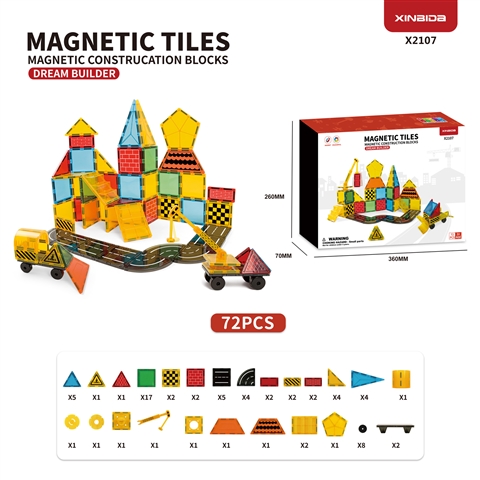
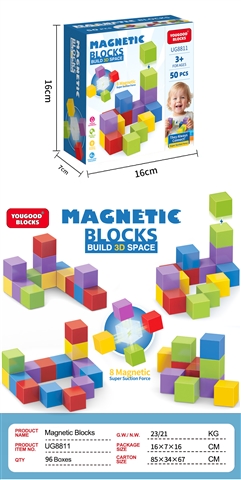
Open the retail box, not the factory's presentation unit. Presentation units are usually hand-built; the box you pull from a finished carton is closer to what a customer receives. On a magnetic construction set, the inspection point is retention, not attractiveness: check whether the magnet is fully enclosed, whether the enclosure can be opened by hand, and whether any magnet-bearing part separates from the assembly under ordinary handling. Magnetic tiles, blocks and figures need magnet retention and ingestion-risk checks after the relevant abuse sequence, not only a magnet-strength value. A pull force printed on a datasheet tells you nothing about whether the magnet can escape the plastic.
Then count the small parts and compare them with the age claim on the packaging. Recall 26-272's published hazard was a small-ball issue combined with an under-three intended age, and CPSC also recalled Vndueey Magnetic Men Toy Sets (recall 26-208, January 22, 2026), where loose magnets fit within CPSC's small parts cylinder. The question to ask out loud, while holding the part, is simple: at what age does this product stop being a choking risk, and which document proves that answer? If the answer is a verbal "three plus" with no test scope behind it, you have found the gap before a regulator does.
Ask the change-control question last, because it is the one suppliers answer least well. If the magnet supplier changes, if the ball diameter shifts by a millimetre, or if the packaging moves from colour box to poly bag, what re-testing is triggered and who signs it off? Supplier records for materials, production, inspection, change control and testing should be retained long enough to support the buyer's market and recall obligations — a recall can arrive a year or more after the units ship, as the 2025 sales windows in these notices show. A factory that cannot describe its change-control trigger in one sentence does not have one.
Document checks: what to ask for, what it proves, what to do when it is missing
| Age-grading statement tied to the retail packaging | Proves the intended age group that drives small-parts requirements. Missing → log unknown and do not approve the SKU. |
|---|---|
| Test report scoped to this model, ball size and packaging | Proves the tested configuration matches the shipped configuration. Missing → request a scoped re-test before sample approval. |
| Magnet retention evidence after the abuse sequence | Proves magnets cannot be liberated in normal and foreseeable use. Missing → unknown; a strength value alone is not a substitute. |
| Entity chain: invoice party, test-file holder, regulatory contact | Proves who answers if a recall is opened. Different names with no written relationship → unknown. |
| Change-control and record-retention policy | Proves records survive long enough to support a market or recall obligation. Verbal policy only → unknown. |
| Recall-screening step before resale | Proves stock is checked against active recall numbers. No process → unknown. |
Before leaving: which records must go in your bag?
Take the signed age-grading statement, the test report with its scope page, and a dated photograph set of the sample you opened — box markings, magnet assembly, small parts, packaging. Recall 26-272 is a useful template for what a regulator publishes: recall number, date, product description, model marking, unit count, sales channel, sales window, retailer legal name and manufacturing country. Mirror that list in your own approval file. If any field has no counterpart in your documents, that is your exposure, and it belongs in the file as unknown rather than in a summary email as an assumption.
Take one more thing: a written recall-response contact and the factory's commitment on what happens if a notice lands. The remedy steps in these CPSC notices — consumer contact, photo of the disposed product, sometimes writing "RECALLED" on the base — are administrative work that someone has to run. Confirm in writing who your factory-side contact is, how fast they can produce production and inspection records for a given shipment, and whether they will cover the documentary side of a recall. This is not a warranty negotiation; it is the difference between a two-week problem and a two-quarter one.
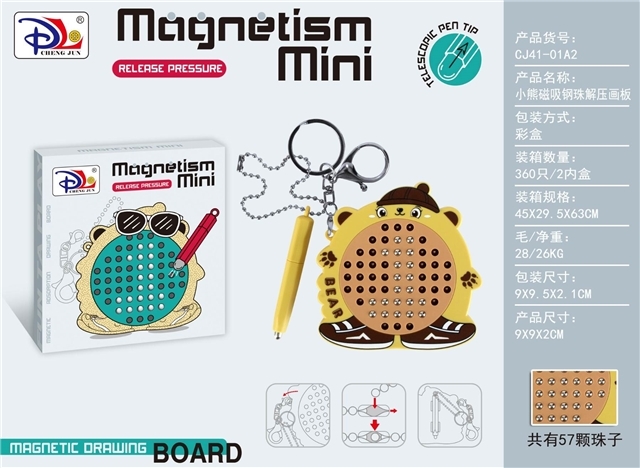
One sample worth opening on a factory visit is a magnetic construction set such as the Magnetic Steel Ball Drawing Board, because the magnetic board, metal marbles and pen each raise a different retention question. Treat it as one sample among several — the method above matters more than any single item.
FAQ
Does recall 26-272 mean magnetic construction sets are unsafe to import?
No. It means this specific configuration — small balls plus an intended age under three — was published as a violation of the mandatory toy standard. The transferable lesson is documentation, not category avoidance: prove the intended age, prove the tested configuration matches the shipped one, and prove magnet retention.
Which recall details should I copy into my own approval file?
Use the CPSC notice structure as your checklist: recall number and date, product description, model marking, unit count, sales channel, sales window, seller legal name, manufacturing country and remedy steps. Recall 26-272 published "Magnetic Sticks" and "Model:20A-13" on the box while the toys carried no identifying marks — so your own file must tie packaging and order records to the units.
Is a magnet pull-force value enough to approve a magnetic toy?
No. Magnetic tiles, blocks and figures need magnet retention and ingestion-risk checks after the relevant abuse sequence, not only a magnet-strength value. Ask for evidence that the magnet cannot be liberated in normal and foreseeable use, and check that the tested model and packaging match what you are buying.
What if the factory has no test report for my exact configuration?
Record it as unknown and do not approve on a document from a different model, ball size or packaging. Scoped re-testing before sample approval is the normal path; approving first and testing later transfers the entire recall risk to you.
How long should a supplier keep production and inspection records?
Long enough to support your market and recall obligations. Recalls in this category have been published for products sold in 2025 and 2026 windows, which means the record need can surface well after shipment. Get the retention period in writing, not as a verbal assurance.
Can I keep selling stock that matches a recalled product?
CPSC states that federal law prohibits selling products subject to a Commission-ordered recall or a voluntary recall undertaken in consultation with the agency. Screen your inventory and marketplace listings against active recall numbers before resale, and quarantine anything that matches.
Sources
- Grtard Magnetic Stick Figure Toy Sets Recalled Due to Risk of Serious Injury or Death from Magnet Ingestion; Violates Ma
- Huaker Magnetic Balls and Rods Sets Recalled Due to Risk of Serious Injury or Death from Choking; Violates the Small Bal
- Pounding Toys Recalled Due to Risk of Serious Injury or Death from Magnet Ingestion Hazard; Violate Mandatory Standard f
- Vndueey Magnetic Men Toy Sets Recalled Due to Risk of Serious Injury or Death from Magnet Ingestion; Violates Mandatory
Related Products & Categories
Request a quote or book a factory visit
If you want the checks above run against a specific magnetic construction set, send the target specification and destination market to Yiwu Toys and we will come back with the sample, current quotation, age evidence and destination documents for that configuration — with anything we cannot verify marked as unknown rather than filled in.