Stop asking whether a China toy supplier is "a real factory." Ask who signs off on the failed lot, who holds the sealed golden sample, who writes the carton spec, and who files the certificate. That list — the responsibility matrix — decides whether your toy program survives a peak season. Whether the counterparty stamps plastic in Chenghai or coordinates six workshops from a Shantou office changes far less than the label suggests.
This page gives you that matrix for the four jobs that break toy import programs: sourcing, inspection, packing and export coordination. Use it to build your purchase specification and approval requirements before you commit a tooling fee or a first PO — and use it the same way whether you are vetting a factory, a trading firm or an agent. If you are running yiwu toy supplier verification or evaluating a Chenghai counterparty, the questions are identical; only the answers differ.
The reason the label disappoints is structural. Chenghai's toy economy is a dense network of specialized workshops, mold makers, parts suppliers, showrooms and trading companies, and many of those factories do not sell directly to overseas buyers at all. They rely on trading companies, showrooms or local agents for communication and export work. So the entity on your invoice is often not the entity on the injection press — and no certificate, audit or factory tour fixes that. A written allocation of responsibility does.
Key Takeaways
- A factory label is not a compliance document. A Children's Product Certificate is product-specific, based on third-party testing at a CPSC-accepted laboratory, and belongs to the domestic manufacturer or importer who certifies — not to a building. Ask which legal entity issues it before you ask how big the plant is.
- Inspection release authority is the single highest-value clause. Decide in advance who defines the acceptance plan, who isolates a failed lot, who records the defect class, and who authorizes release after rework. If you want an AQL number, it belongs in the agreed inspection plan on the PO, not in a supplier's catalogue sentence.
- Physical sample control beats photo approval. Without a sealed, dated golden sample held by a named custodian, colour, fit, flash and function arguments are settled by email — which means they are not settled.
- Packing and export coordination are specification work, not logistics admin. Carton grade, corner protection, pallet height and booking instructions belong in a document that a claim can later reference.
- Every one of these items is verifiable before you pay. Test reports, certificates of conformity, tracking labels and tooling terms can all be requested as documents and checked against the current regulation — and "we will send it later" is an answer.
Why Does the Factory-Versus-Trader Label Tell You So Little?
Because the label describes ownership, and your risk sits in task allocation. Chenghai, in Shantou, Guangdong, holds the "China Toy & Gift City" title and grew out of family-run manual injection workshops dating to around 1979, shifting to electronic toys by 1985. That history produced a fragmented, specialized supply base rather than a handful of vertically integrated giants. Directory listings make the point bluntly: a five-person trading firm can advertise OEM follow-up and import/export agency services alongside access to products from thousands of manufacturers, while disclosing nothing about inspection protocols, packing standards or export documentation.
None of that is automatically bad. A trader with a good QC bench and a disciplined document file can outperform a factory that has never written a carton spec. The failure mode is the opposite assumption — that a factory visit, a business licence or a self-declared certification list transfers responsibility to the supplier.
Two facts should reset your expectations. First, many Chenghai factories do not deal directly with overseas buyers; negotiation, quality checks, packaging and shipping frequently sit with a trading company, showroom or agent. Second, the compliance architecture never belonged to the factory in the first place. Under US rules, children's products subject to a consumer product safety rule generally need third-party testing and certification, and the written certificate is issued by the domestic manufacturer or importer. Under EU rules, the Toy Safety Directive's essential safety requirements, CE marking and the EU Declaration of Conformity form a conformity process that has to be matched to the actual product scope. You are buying a task allocation, not a title deed.
The Responsibility Matrix: Four Jobs, One Named Owner Each
Write this as a table in your PO or supplier agreement and fill in a name, not a department. Unassigned cells are where margin goes to die.
Sourcing and specification. Owner decides the product configuration, age grading and material class, and freezes them in a specification document before tooling. This is also where age grading and small-part risk get assessed against the actual configuration — including detachable accessories and packaging components, not just the toy body.
Inspection and release. Owner defines the acceptance plan, performs inline and final checks, isolates any failed lot, records the defect class and releases only after rework. If you want an AQL number, it comes from the agreed inspection plan on the PO — not from a catalogue sentence.
Packing and marking. Owner writes the carton specification — board grade, corner protection, pallet height — and controls the printed fields: age grading, warnings, importer identification and tracking information. Warnings and instructions must be translated and placed per each target market's language requirement, not copied from one English package. Packaging, product markings and lot control should be reviewed together, because that is how they fail together.
Export coordination and documents. Owner books the load, issues the booking instruction with the packing data, and holds the file that maps market, lot and which test covers which scope. Paperwork that does not match the lot is not paperwork.
Which Responsibilities Should the Sourcing Partner Own, and Which Stay With You?
Split them by who carries legal liability, not by who is convenient. Four items are yours and cannot be delegated: the identity of the certifying firm on the certificate of conformity, the accuracy of the product identification it cites, the decision to place the product on the market, and the choice of the laboratory. Everything upstream of that — factory matching, sample rounds, negotiation, inline checks, consolidation, carton customization, booking — can sit with a partner, provided each one has a named owner and an evidence trail.
A practical test: ask the partner to show you the seven elements a Children's Product Certificate must contain — product identification, citation to each applicable rule, the certifying domestic manufacturer or importer, the test-record contact, date and place of manufacture, testing dates and locations, and the identifying laboratory. If the partner can walk the elements but cannot tell you who signs, you have found the gap. Certificates must be in English, and no specific template is required as long as the elements are present and accurate.
Tooling deserves its own line item. Who pays the fee, who owns the mould, how long it is stored, and what happens if it sits idle are contract terms, not handshake terms. A buyer who pays a tooling fee and never freezes storage years or release conditions has funded an asset they cannot retrieve. Write the fee, the ownership, the storage period and the idle-tool outcome into the agreement.
Change control in peak season is the other line item buyers forget. A verbal "quick colour change" in September has missed more vessels than steel problems ever have. Write the freeze date, the change-over hours and which job is on the press. Production lead time quoted without peak notes is fiction.
Responsibility Matrix: Who Signs What
| Product specification and age grading | You own the decision; partner confirms feasibility. Freeze configuration, material and age grade in writing before tooling. Verify against current CPSC and EU guidance for the actual configuration. |
|---|---|
| Inspection plan and AQL | Partner proposes, you approve. The number lives in the agreed inspection plan on the PO — demand it as a document, never accept it as a catalogue claim. |
| Failed-lot isolation and rework release | Partner executes; you require the defect class recorded and release only after rework. Ask for the lot record, not the assurance. |
| Golden sample sealing and custody | Joint. A sealed, dated physical sample with a named custodian on both sides. Compare bulk to that piece for colour, fit, flash and function. |
| Tooling fee, ownership, storage, idle terms | Written agreement before payment. Fee, ownership, storage period and idle-tool outcome each get a line. |
| Peak-season freeze dates and change-over hours | Partner commits in writing; you hold them to it. Verbal colour changes in September are a schedule risk. |
| Line clearance on SKU changeover | Partner executes. Labels, colours and work instructions cleared before restart — mixed labels reaching a retailer are a recall-shaped problem. |
| Carton specification and pallet build | Partner writes board grade, corner protection, pallet height; you approve. Corner-sensitive goods get damaged in LCL when the booking instruction is informal. |
| Warnings, age grading and language versions | Partner prints; you approve per market. Translate per destination requirement rather than copying one English package. |
| Tracking label and lot identification | Partner applies; you verify permanence and legibility. Tracking information should support product identification, so review it alongside packaging and lot control. |
| Certificate of conformity (CPC) and issuing firm | Domestic manufacturer or importer certifies. The certificate is product-specific and based on third-party testing at a CPSC-accepted laboratory — it is never a blanket factory document. |
| EU Declaration of Conformity and CE marking | Economic operator named on the declaration owns it. Match scope to the actual SKU; CE marking and the declaration belong to the conformity process, not to the supplier's marketing. |
| GPSR manufacturer and importer identification | You and the named economic operator. The General Product Safety Regulation is a separate instrument from the Toy Safety Directive — do not let one document stand in for the other. |
| Booking instruction and shipping documents | Partner issues with the packing data; you reconcile against the PO. Booking files are where cargo claims are won or lost. |
| Electronic certificate filing with customs | Confirm who files. From July 8, 2026, importers of most regulated consumer products must electronically file certificates of compliance with U.S. Customs and Border Protection via a Partner Government Agency Message Set. |
How Do You Verify a Chinese Toy Supplier Before the First PO?
Verify documents against the current regulation, not against the supplier's own summary. Three checks do most of the work.
First, request the test report and read the header. A report should identify the product configuration, age grade and the standard edition tested. If the report does not name the configuration you are buying, it is not your report. For ASTM F963, check the edition cited and confirm the current incorporated status before you quote it to a retailer. Reports that name a different material, colourway or accessory set are evidence of a different product.
Second, request the certificate and check the issuer. A CPC is based on test results and identifies the applicable rules and the responsible parties; it is product-specific and should never be described as a blanket factory certificate. Certificates and supporting test reports must be in English. For Great Britain as of 2026-08-17, CE marking continues to be recognised alongside or in place of UKCA when the recognised requirements are met, while Northern Ireland follows a separate CE/CE UKNI route — so a single certificate rarely covers every destination you sell into.
Third, ask for the file that maps market, lot and test scope. UKCA and a VOC file on an electric bubble machine are different papers; buyers have tried to use one document for both. The useful question is not "are you certified?" but "which file covers this SKU, this lot and this market, and who keeps it?"
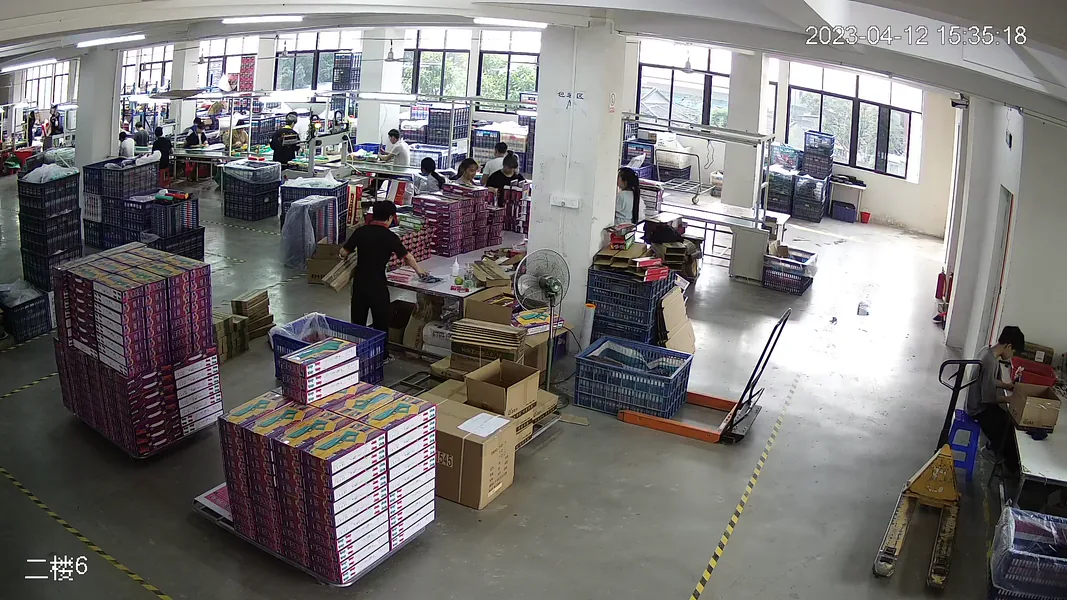
Then walk the factory with the matrix in hand. Watch a changeover. Ask to see the QC shelf where the sealed sample sits. Ask what happens to a failed lot — the answer should include isolation, defect class and rework release, not reassurance. Ask who stops the line when a new SKU starts with the previous SKU's labels still in the hopper. Line clearance is boring right up until a mixed label reaches a retailer.
For materials, ask process questions rather than certificate questions. First-article inspection should verify that initial production parts meet drawing, material, appearance and assembly requirements before routine release — ask to see the first-article record. And if the product uses PA, PC, PET or another hygroscopic engineering resin, ask how molding conditions are controlled, because those resins absorb moisture and need tighter control than a dry-stored non-hygroscopic material.
Chenghai, Shantou and Yiwu: What Each Origin Actually Gives You
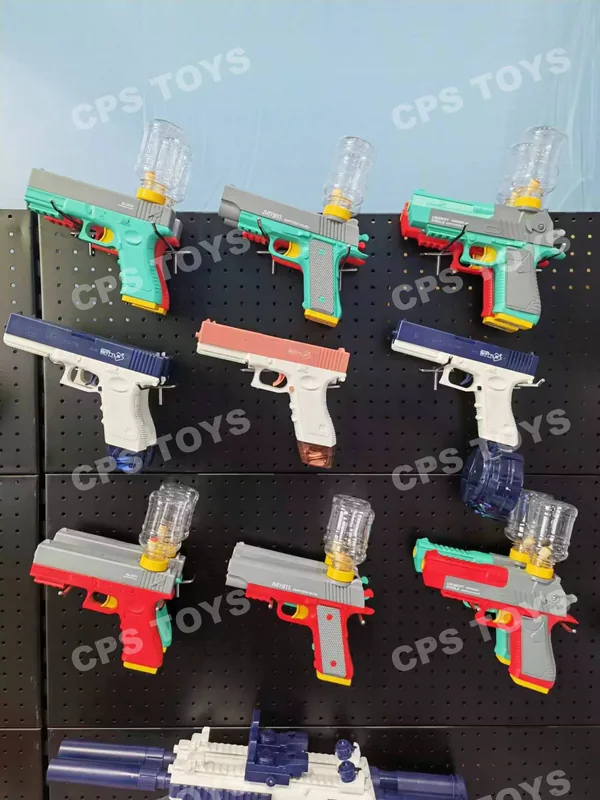
Chenghai (Shantou, Guangdong) is the plastic-toy cluster: mold making, injection, painting, assembly, electronics and packaging sit within a short drive of each other, and the region's design output moves fast. The trade-off is that the cluster is fragmented. Many factories do not sell directly to overseas buyers and lean on trading companies, showrooms or local agents for communication and export work — which is exactly why the responsibility matrix matters more here than a factory signboard. If you need tooling, electronics or high-volume plastic, Chenghai is the natural first stop.
Shantou more broadly adds the trading and export layer: order follow-up, consolidation, documentation and shipping coordination. That layer is where small buyers get access to a cluster they could not otherwise reach, and where responsibility for inspection and packing quietly migrates to someone who never touches the press. Name that party in the contract.
Yiwu is a different animal: a general-merchandise and small-commodity market town where toys sit beside thousands of non-toy lines. Its strength is breadth, mixed-container consolidation and speed on low-complexity items; its weakness for toys is depth on safety documentation for a specific SKU. Yiwu toy supplier verification therefore leans harder on document checks than on production-line observation, because the market's model is aggregation rather than manufacturing.
Pick by product, not by reputation. Tooling and electronics: Chenghai. Mixed seasonal assortments and small-order breadth: Yiwu. Documentation-heavy programs for the US or EU: whichever origin, the certificate and test file must map to the SKU — the postcode does not do that work for you.
FAQ
Can a China sourcing partner issue the Children's Product Certificate for my toys?
No. The CPC is issued by the domestic manufacturer or importer certifying compliance, based on third-party testing at a CPSC-accepted laboratory. A sourcing partner can coordinate testing and maintain reports, but it cannot take over the certifying role. Confirm in writing which legal entity signs and which person maintains the test records.
Is it safer to buy directly from a Chenghai factory than through a trading company?
Not automatically. Many Chenghai factories do not deal directly with overseas buyers and rely on trading companies, showrooms or local agents for communication, quality checks, packaging and shipping. A disciplined trader with written inspection and packing procedures can be safer than an unresponsive factory. Decide by task allocation, not by entity type.
What MOQ should I expect on a custom toy order?
MOQ varies by spec — tooling complexity, material, decoration and packaging all move it, and no honest answer exists without a product. Ask for the MOQ tied to your exact configuration, then ask which line item drives it. Small buyers often combine orders or accept a higher unit price for lower quantities rather than lowering the MOQ.
Which certification applies to toys sold in the EU versus the US?
They are different regimes. The US route generally involves CPSC rules, third-party testing and a Children's Product Certificate. The EU route runs through the Toy Safety Directive's essential safety requirements, CE marking and an EU Declaration of Conformity matched to the product scope, with the General Product Safety Regulation as a separate instrument. Verify the current consolidated text and your product scope rather than reusing a supplier's summary.
Do I need a sealed golden sample, or is an approved photo enough?
Insist on the physical sample. Colour, fit, flash and function disputes are settled by comparing bulk against a sealed, dated reference piece held by a named custodian — not by email threads. Buyers who approve only a photo typically pay for it on the second lot.
How do I check that a factory's certificate actually covers my order?
Match the document to the SKU, the lot and the destination market. A test report should identify the product configuration, age grade and standard edition; a certificate is product-specific and should not be presented as a blanket factory document. If the report names a different configuration, it is not your evidence.
What should a tooling agreement include before I pay a mould fee?
Four things in writing: the fee, who owns the tool, how long it is stored, and what happens if it sits idle. Tooling policy is a document, not a handshake — buyers who pay a fee without freezing storage years and release conditions have funded an asset they may not be able to retrieve.
Sources
Request a Quote or a Factory Audit
If you are ready to allocate responsibilities rather than collect labels, send us your product configuration, target market and age grade. We will come back with the questions your matrix still leaves open — inspection release authority, sample custody, tooling terms, carton specification and which document covers which market — and a quote built on those answers. If you want to see the floor first, ask for an audit slot and we will walk you through changeover, first-article records and line clearance.
Bring the matrix. We would rather argue about the freeze date now than about a mixed label in a retailer's back room later.