
A supplier's claim is only as strong as the document class behind it, and the four classes are not interchangeable. A Children's Product Certificate is a declaration built on test results, not proof by itself. A third-party lab report proves testing of a specific configuration against a specific rule set. Internal records — bill of materials, change control, traceability — prove the supplier can hold a specification across repeat orders. Direct observation, meaning a factory visit or a live video walkthrough, is the only thing that confirms the floor actually exists and runs. Sort every claim into one of those four buckets before you send a deposit, whether the factory is in Chenghai, Shantou, Yiwu, or somewhere else. Claims that land in no bucket are the ones that cost you a container.
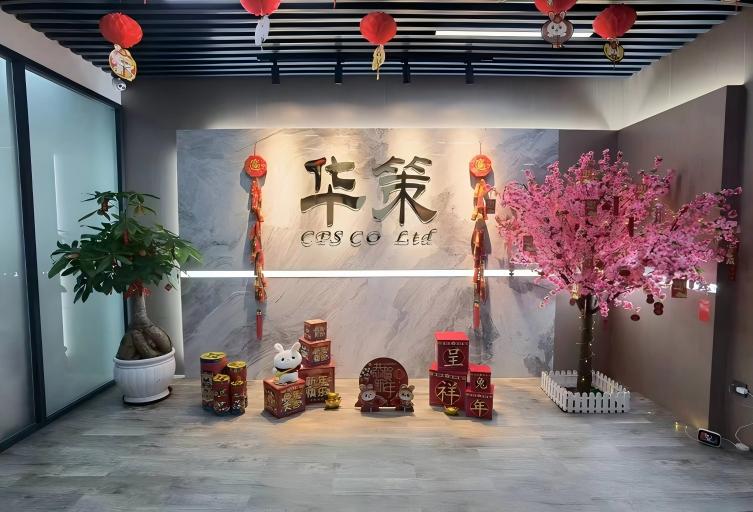

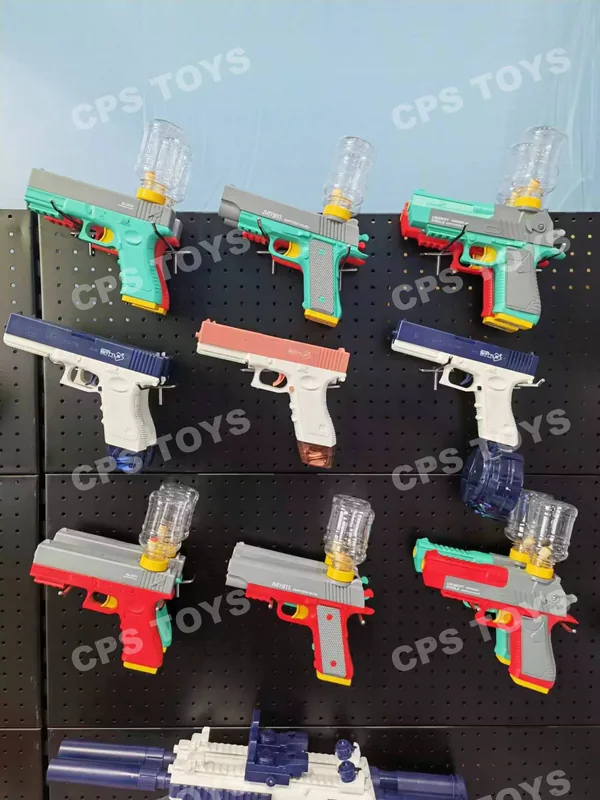
Named factories
| Claim: "Our toys are US compliant" | Ask for: Children's Product Certificate naming the SKU, age grade, applicable rules, importer, manufacturer, test lab, and date and place of manufacture. Verify: the CPC matches your exact SKU and importer entity, not a sibling model. |
|---|---|
| Claim: "We are lab tested" | Ask for: the third-party test report behind the CPC, with product photos and construction details matching the shipped version. Verify: the report is current and its scope covers the applicable rules for your configuration. |
| Claim: "We meet EN71" | Ask for: test results against the relevant EN 71 parts for your product, plus the technical file and EU Declaration of Conformity. Verify: the report identifies product configuration, age grade, and standard edition. |
| Claim: "We handle EU paperwork" | Ask for: the EU Declaration of Conformity and CE marking artwork, mapped to your importer/manufacturer role. Verify: GPSR obligations are a separate instrument from the Toy Safety Directive and both need an owner. |
| Claim: "We control our materials" | Ask for: bill of materials and specification records covering material composition, components, dimensions, coatings, and accessories. Verify: no untested material or design change sits between the tested sample and the production run. |
| Claim: "We can trace any batch" | Ask for: production date range, assembly site, and component source records, plus the tracking label layout. Verify: the tracking information is permanent and supports product identification. |
| Claim: "We are a real factory" | Ask for: business license, production address, and ownership details. Verify: by audit or live video walkthrough of the actual line, not a showroom. |
| Claim: "We can scale to your volume" | Ask for: current quote, sample, and capacity evidence tied to your SKU. Verify: reference MOQ and price in any catalog are starting points only and must be reconfirmed. |
What the public record shows
Public records and official guidance tell you what a document can and cannot prove. They do not certify any specific factory, and any article that says otherwise is selling you something.
On the US side, children's toys generally require testing at a CPSC-accepted laboratory and a Children's Product Certificate, and the requirement applies to products designed or intended primarily for children 12 years old or younger, according to CPSC toy safety business guidance. Two details trip up importers. First, laboratory acceptance is specific to the relevant safety rules — one lab may not cover every required test, so you have to match the applicable requirements and the lab's scope to your actual toy configuration. Second, the CPC is product-specific. It is not a blanket factory certificate, and it should never be described as one.
The EU side runs on a different instrument set. Toys placed on the EU market must meet the applicable essential safety requirements under the Toy Safety Directive 2009/48/EC, with CE marking and an EU Declaration of Conformity belonging to the conformity process and matched to the product scope. The General Product Safety Regulation (EU) 2023/988 is a separate legal instrument, not a restatement of the toy directive, so importer, manufacturer, and product-identification information has to be mapped to the correct market role. A test report should identify the product configuration, age grade, and standard edition — and the applicable edition should be read from the current regulation, including 16 CFR Part 1250 and ASTM F963 for the US, before anyone quotes a report at you.
Change control is where most compliance stories quietly break. CPSC guidance describes retesting affected requirements after a material change to a children's product and issuing a new CPC from the resulting passing tests. When you place an OEM request, separate unchanged components from changed materials and ask who coordinates the document review. Do not assume an earlier report automatically covers the revised configuration. A new colorant, a swapped accessory, a different coating, or a refreshed retail box is enough to send you back to the lab.
Age grading and small parts sit in the same pile. According to CPSC small parts guidance, age grading and small-part risk are connected and must be assessed for the actual product configuration, and assemblies, detachable accessories, and packaging components need the same review discipline as the toy itself. Tracking labels belong here too: CPSC tracking-label guidance states the information should be permanent and support product identification, which means packaging, product markings, and lot control get reviewed together, not separately.
A catalog record does not belong on this list at all. A catalog snapshot — material, packing, reference MOQ, reference price — establishes a catalog record only. It is not certification, not age suitability evidence, not licensing, not stock, and not factory capacity. Take a wooden science kit recorded at a reference MOQ of 36 units or a plastic kitchen set recorded at 54 units with 18 per carton: those numbers tell you what a listing says, and nothing more. Sample, current quote, age evidence, and destination documents all have to be reconfirmed before you treat them as real.
How do you verify a supplier without a certification shortcut?
You verify by asking for the document that supports the exact claim, then checking that the document's scope matches your SKU. There is no shortcut, and any supplier offering one is telling you something about how they handle the rest of the order.
Build the request as a dated pack, not a conversation. Ask for the CPC or EU Declaration of Conformity, the underlying third-party reports, specification and bill-of-materials records, packaging and labeling proofs, and the commercial shipment files — invoice, packing list, carton marks, quantity, consignee. The point is consistency: the tested sample should match the shipped version in material, dimensions, function, accessories, and age grade. If the importer name on the certificate is not your entity, that is a finding, not a typo.
Label everything you receive. A declaration is what the supplier asserts. A third-party document is what an accredited lab or auditor observed and recorded. A direct observation is what you or your agent saw on the floor. Mixing the three is how buyers end up believing a factory is certified when all they hold is a self-declaration with a logo on it.
Record missing values as missing. If units per carton, product size, or net weight is not stated, write "not recorded" and ask. Do not fill the gap with an assumption, and do not let a supplier fill it with a plausible number. Empty fields are questions, not answers.
Treat age grading as a controlled field. It appears on the instruction sheet, the retail box, and the online listing, and inconsistency across those three is one of the most common document failures buyers find late — usually after the container has sailed.
Which regional cluster fits which product?
Chenghai in Shantou, Guangdong, is the dense plastic and electronic toy cluster: injection molding, tooling, and component suppliers sit within a short drive of each other, which shortens the loop between a mold change and a test sample. If your product is a battery or motor toy, or anything with a multi-part plastic assembly, that proximity is worth more than a marginally lower unit price elsewhere.
Yiwu is a trading and small-commodity hub rather than a deep manufacturing base. It is strong for mixed-carton assortments, fast sampling across many small items, and low-volume trial orders. It is weaker when you need to see a single production line dedicated to your SKU, because the item may be sourced from a factory you never meet. If your approval process depends on observing the line that makes your product, ask directly who manufactures it and where.
The practical rule: choose the cluster that matches your document burden. A simple plastic novelty with one material and one rule set is manageable almost anywhere. A multi-material electronic toy with a charging circuit, a coating, and a licensed character needs a cluster where tooling, electronics, and testing can be coordinated by people who talk to each other daily. That is a supply-chain argument, not a marketing one.
FAQ
Does a Children's Product Certificate prove a factory is certified?
No. The CPC is based on testing results and identifies the applicable rules and responsible parties, and it is product-specific — it should not be described as a blanket factory certificate. Treat it as a declaration tied to one SKU, and check that the SKU, age grade, importer, and manufacturer details match your order.
Can a supplier reuse an old test report for my OEM version?
Not automatically. CPSC guidance describes retesting affected requirements after a material change and issuing a new CPC from the resulting passing tests, so separate unchanged components from changed materials and ask who coordinates the document review. Do not assume an earlier report covers the revised configuration.
One lab report — does it cover everything I need for the US market?
Not necessarily. Laboratory acceptance is specific to the relevant safety rules, and one laboratory may not cover every required test. Match the applicable requirements and the laboratory's scope to your actual toy configuration before you accept a report as complete.
Is the EU Declaration of Conformity the same thing as a CPC?
No. They belong to different legal frameworks. EU toys must meet the applicable essential safety requirements under Toy Safety Directive 2009/48/EC, with CE marking and an EU Declaration of Conformity matched to the product scope, while the General Product Safety Regulation (EU) 2023/988 is a separate instrument. Map importer, manufacturer, and product-identification information to the correct market role for each.
What is the fastest honest way to check a factory's capability claim?
Ask for the document behind the specific claim, then check its scope against your SKU, and confirm the physical operation by audit or live video walkthrough. A catalog listing with a reference MOQ and price establishes a catalog record only — it is not evidence of certification, capacity, or stock.
Do tracking labels matter for supplier verification?
Yes, if you sell into the US. Tracking information should be permanent and support product identification, so review packaging, product markings, and lot control together. A supplier who cannot show a tracking label layout for your SKU has not finished the compliance work.
Sources
Request a quote or a factory audit
Send us your SKU list, target market, and age grade, and we will tell you which documents we can produce for that configuration and which ones require a fresh lab booking. If you want to see the line before you commit, ask for a live walkthrough and we will schedule it against your product, not a showroom sample.