
When a Hong Kong Toy Fair stand shows a novel play mechanic, how do you distinguish an assortment opportunity from a one-demo gimmick? Put the central action back into the buyer's hands. A lever-flick contest for 2–4 players and a bow combining bubbles with water play offer very different reasons to stop: one promises shared competition without batteries; the other puts distinct outdoor functions into one product.
The useful question is what happens when another buyer takes over the controls. Can another person reproduce the action, understand the response and get the toy ready again? Those are observation checkpoints, not durability tests. Follow them with a look at power dependency, assembly and packing, then decide which retail channel can explain the experience clearly.
The six toys below are actual Yiwu Toys catalogue references, not confirmed 2027 exhibits or fair launches. Their recorded specifications provide concrete comparison prompts for your visit, rather than reports of completed hands-on testing.
Where should your innovation hunt start?
Start with educational, party and outdoor play, then use electronic toys as a contrast. The physical is scheduled for January 11–14, 2027, at HKCEC, 1 Expo Drive, Wan Chai; the official overview identifies the Harbour Road entrance.
The names Educational Toys & Games, Festive & Party Items, and Outdoor & Sporting Goods. Make these your comparison territories: shared tabletop competition, outdoor effects and hands-on exploration. This is a thematic touring sequence, not a claim that the catalogue products occupy particular stands.
Electronic & Remote Control Toys and AI & Smart Toys provide another useful comparison: identify what the player actually controls before counting effects. Separately, Pop&Play runs January 10–13, 2027, at HKCEC Convention Hall, with a designer, IP and co-branding emphasis and access for trade and public. Include it if character appeal matters to your assortment, while distinguishing a new identity from a new interaction.
Hungry Wolf Eats Beans: let the competition carry the toy
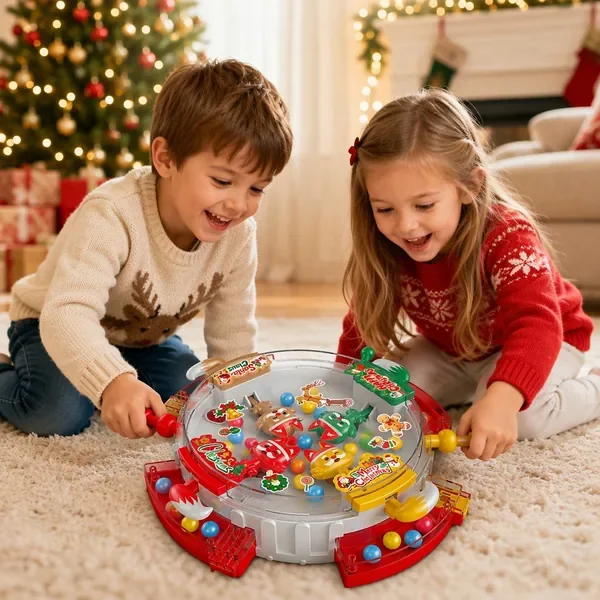
Hungry Wolf Eats Beans Christmas Mechanical Board Game, YT351000, gives 2–4 players their own levers. Pressing activates a flick mechanism as the characters compete for colored beans. There are no batteries, motors, lights or sound electronics: the contest itself has to hold attention.
At a comparable fair demonstration, change operators and play another round rather than watching the presenter repeat a practiced flourish. Observe whether the lever response is easy to reproduce and whether resetting the contest interrupts its momentum. A strong demonstration lets you understand both the action and the reason to compete again.
For a family-game or seasonal-gift shortlist, separate the mechanism from the Christmas treatment. Would the contest still deserve shelf space without its festive identity? That distinction helps a mixed-category buyer recognize reusable assortment potential while still appreciating the seasonal version.
The bubble-and-water bow: give each function its own demonstration
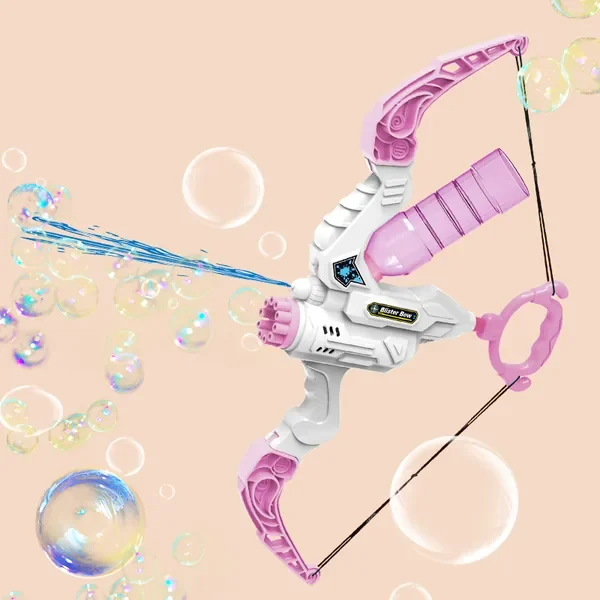
The 2 in 1 Outdoor Electric Bubble Bow and Arrow Water Gun, YT254567, combines bubble and water-gun functions and specifies 3 AA batteries, not included. Its assortment opportunity rests on whether both activities are worth using, rather than whether the combined description sounds generous.
The recorded product dimensions are 33 × 7 × 60 cm, making grip, reach and handling worthwhile demonstration subjects. The separate color box measures 34 × 31 × 7 cm: watch how the ready-to-play form relates to the packed retail unit instead of assuming the preparation is obvious.
Ask to see bubbles, water play and a return to the starting function. Follow the actual conversion and refilling process, including any change of grip. For an outdoor seasonal range, the decisive demonstration is a complete changeover that leaves you able to explain both activities without retelling a complicated stand presentation.
The road-light bubble machine: discover what the quieter mode contributes
The Road Light Bubble Machine Charging Version, YT347977, has 2 operating modes: light plus bubbles, and light plus bubbles plus music. The useful distinction is that music can be omitted while the visual activity continues—a more specific proposition than simply adding sound.
USB-rechargeable 3.7 V power gives this model a different preparation routine from the AA-powered bow. Its water-fillable weighted base and matching bubble-liquid bottle also make filling and positioning part of the experience, not background details to skip during a meeting.
The recorded product measures 20 × 20 × 85 cm, so assess it as an upright bubble-play object. Its color box measures 19.3 × 13.3 × 19 cm; seeing the assembly and pack-back explains the selling unit better than the standing display alone.
Watch ordinary operation with the base filled, then compare the modes. For an outdoor or party assortment, decide whether the upright format offers a useful alternative to handheld play and whether the quieter setting broadens its appeal. Observe stability in normal use rather than turning the stand demonstration into an improvised tip-over test.
The lock activity table: compare the hand movements before the soundtrack
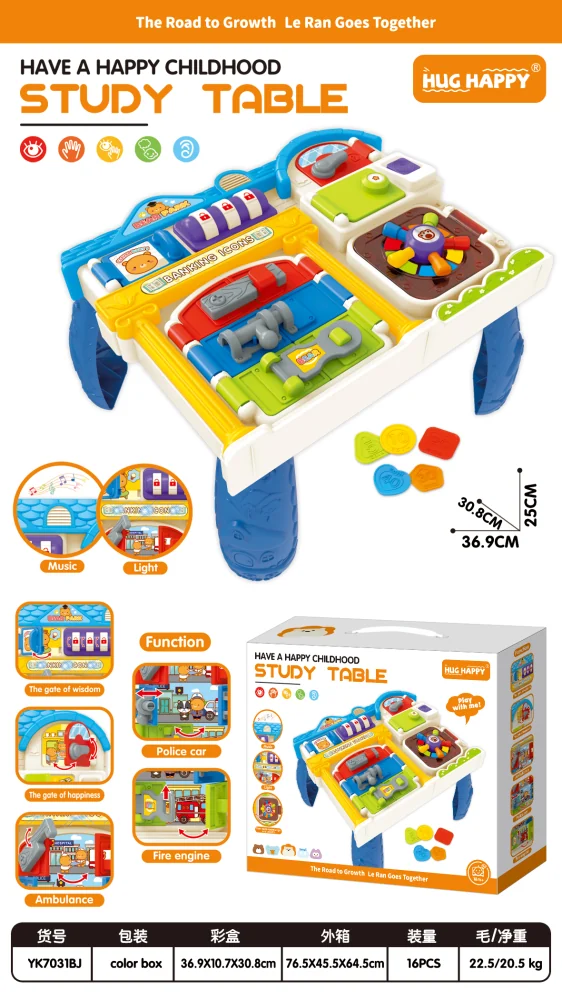
The Montessori Lock Activity Learning Table, YT350566, combines lock-opening modules, shape-matching holes, gear dials and interactive mechanisms. Tilting, unlocking or pressing can trigger sounds. The interesting fair comparison is whether those activities feel meaningfully different in the hands.
Its sound-and-light configuration uses 3 AA 1.5 V batteries, not included, and the toy is not rechargeable. Request an unpowered demonstration to discover which activities remain available and which responses depend on electricity; that comparison keeps the physical mechanisms central.
The recorded finished dimensions are 36.9 × 30.8 × 25 cm, while the color box measures 36.9 × 10.7 × 30.8 cm. Follow the closed-box-to-ready sequence to identify the actual assembly, rather than inferring it from the size difference.
For a learning-activity range, the deciding demonstration moves between different modules and shows their individual purpose. Assess the variety of actions and the setup burden, not the educational promise suggested by the product name.
The dinosaur drawing board: inspect the effect and the activity separately
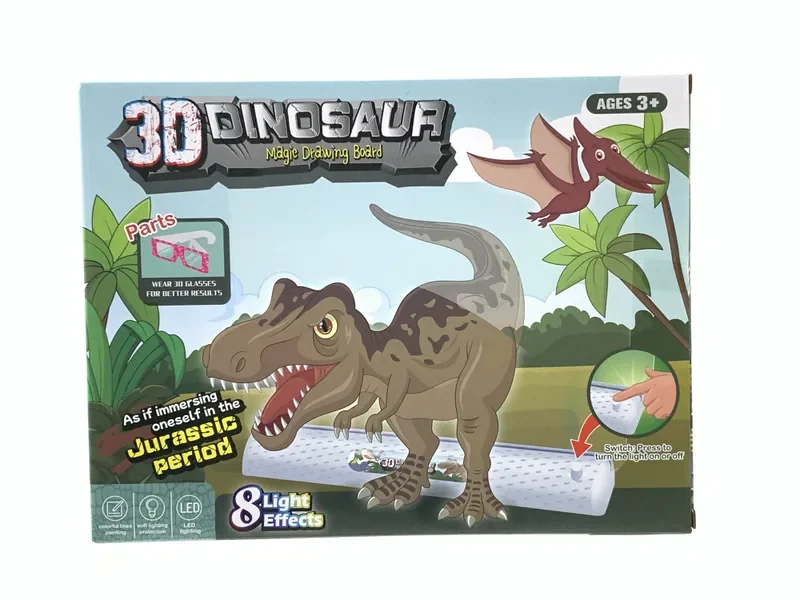
The DIY Educational 3D Drawing Board Dinosaur Edition, YT350072, includes an LED base, markers, dinosaur outline cards and 3D glasses. Its catalogue describes tracing or free drawing, fluorescent illumination and a three-dimensional effect viewed through the glasses.
The board measures 24.7 × 5.3 × 21 cm, with a separate 30 × 4 × 23 cm color box. The battery description specifies typically 3 AA batteries, not included, and non-rechargeable power; retain that qualification when recording this reference.
At a relevant fair demonstration, compare the same artwork unlit, illuminated and through the glasses, then try a freehand drawing rather than only the prepared outline. This reveals how much of the appeal belongs to drawing and how much to the visual treatment.
For an arts-and-activity shortlist, the combination earns attention if both experiences are appealing. Include the markers, cards and glasses in the pack-back observation: keeping the activity together is part of judging the retail proposition.
The RC contrast: identify the central action beneath the effects
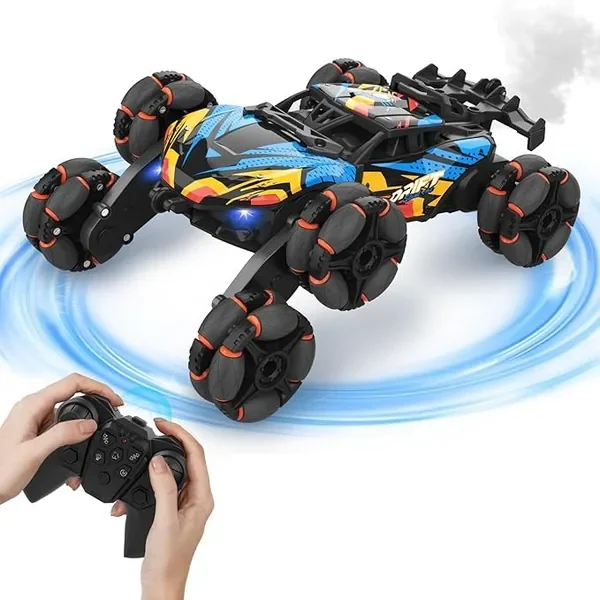
The 6WD RC Drift Stunt Car with 360 Rotating Spray, YT306028, lists gesture sensing, lighting, rotating spray and 6-channel control. Its controller uses 2 batteries (AA), adding a separate power requirement to the demonstration routine.
Keep this as a feature-stacking contrast, not a recommendation for the non-RC shortlist. Mentally set aside the secondary effects and identify the central action that would attract the customer. Take that question back to the lever game, bubble products and drawing activity: fewer effects may still support a more readily explained buying proposition.
What should your fair comparison record?
Record the repeat action, power dependency, setup and intended channel separately. A memorable opening demonstration should not answer all of them on the toy's behalf.
Repeat a representative action through its 3rd and 10th operation, recording response consistency, reset effort and whether the play remains engaging. These are proposed observation checkpoints, not a durability test or a claim that testing has taken place.
| buying_question | demonstration_to_capture | assortment_decision |
|---|---|---|
| Does the action repeat? | Change operator, reproduce the central action and restore the starting state. | Is the experience understandable without the presenter's performance? |
| What depends on power? | Compare the underlying hand activity with the powered response where relevant. | Are electronics central to the play or an added treatment? |
| How much assembly and packing? | Follow the closed-box-to-ready sequence and its reversal. | Does the retail unit support the attractive display experience? |
| Which channel fits? | Identify the main proposition: competition, outdoor activity, exploration or drawing. | Can the intended customer understand why this toy belongs in the range? |
How can you turn the comparison into a fair meeting?
Use a mechanism-specific demonstration brief with the fair's matching and scheduling tools. The official overview schedules Click2Match for January 4–21, 2027, surrounding the physical visit; runs December 11, 2026–February 10, 2027.
Keep the brief practical: identify the action you want repeated, the relevant power comparison, the closed-box setup and your intended retail channel. That gives a meeting a buying purpose beyond watching the opening trick.
During the visit, scans exhibitor booth or product QR codes to access details, favorites, chat, enquiries and in-person or online meeting scheduling. Use the conversation to agree the follow-up demonstration; the scan itself is not an appointment confirmation.
Begin with the official buyer-registration route
Go to the and use its To Visit entry to begin buyer registration. covers personal and company information, matching categories and purpose, then confirmation by email. If the upcoming fair's registration is not yet available, the site may display an information-coming-soon notice.